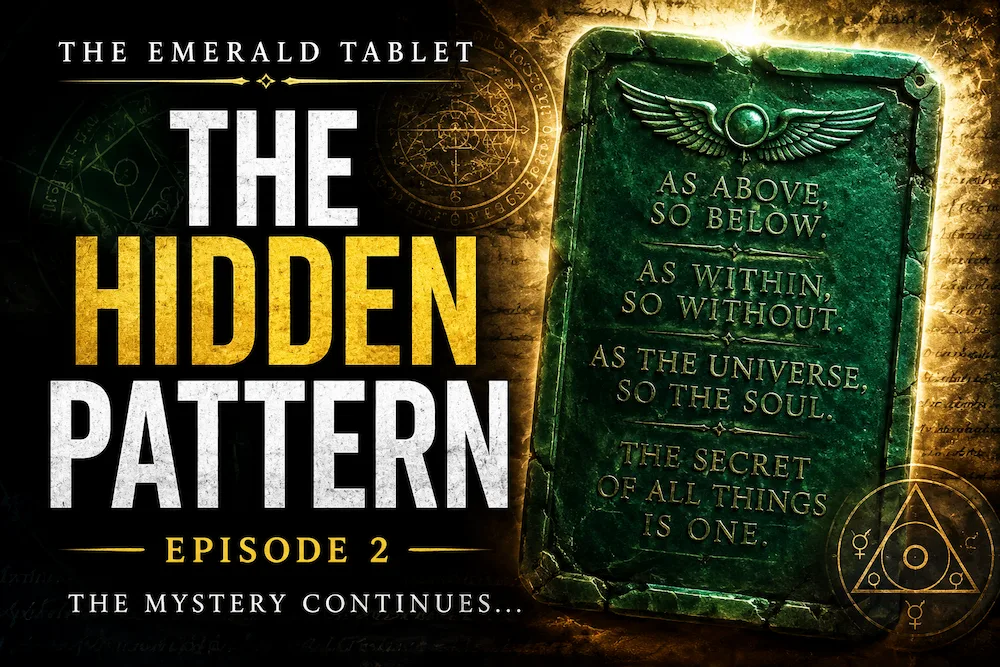
Over the centuries, the Emerald Tablet has been interpreted in many different ways. Some believe it is a purely spiritual text. Some see physical alchemy, while others recognize modern psychology. Indeed, everyone interprets it differently depending on what they are looking for. But there are always a few researchers who notice something completely different. And that is exactly what happened to many of you over the past seven days. While everyone interpreted the text through their own lens, a few of you noticed an undeniable recurring theme: water, or some kind of specific liquid.
Let’s re-examine a few lines from the tablet:
"Its father is the sun."
"Its mother is the moon."
"The wind carried it in its belly."
"The earth is its nurse."
To a modern reader, this sounds strikingly like a poetic description of the water cycle. Throughout history, ancient texts have made constant, veiled references to a legendary liquid: Divine Water, Zamzam Water, the Water of Life, the Elixir of Immortality, Heavenly Water, and Living Water. This was clearly not ordinary drinking water, but a highly specific kind of "water." If this is true, this liquid could be exactly what the alchemists called the Philosopher's Stone.
So, let us assume the tablet is talking about a liquid. Even if we accept that answer, the text still hides a deeper riddle. There seems to be an intense emphasis—a profound preamble—in the very first line of the Emerald Tablet:
"This is a truth without falsehood, certain and absolutely true."
The entire tablet is only a few lines long. Why would an ancient writer waste precious space on a repetitive introduction? Ancient writers rarely wasted words, especially when carving a text meant to survive millennia. Perhaps this sentence is neither a preamble nor mere emphasis. Perhaps it refers to a fundamental operational principle—a specific path required to approach the true knowledge of the secret. If you look closely, the entire tablet utilizes the exact same pattern over and over again. First, it presents absolute opposites:
Above versus Below
Sun versus Moon
Hard versus Soft
Higher versus Lower
Then, it immediately demands unity: "...to perform the miracles of the one thing." This loop is repeated continuously throughout the text. This is what the Tablet is actually concealing: a universal process for discovering truth itself. It is an operational engine that can be applied to matter, nature, consciousness, alchemy, and virtually everything in existence. In fact, the only explicit, active instruction in the entire Tablet is this single sentence:
"Separate the earth from the fire, the subtle from the gross, smoothly and with great ingenuity."
This line is the master key. Everything else in the text is merely a description; this line is the direct command. Understanding this command reveals a universal, three-step pattern that Hermes repeatedly points to:
The Starting Point (The One Thing)
Division (Separation into Polarity)
Transformation and Reunification (A Higher Unity / Pure Gold)
Notice how the Tablet constantly emphasizes separation. It intentionally creates polarity—Father/Sun, Mother/Moon. Then, it introduces a dynamic transformation. Nothing remains static or fixed in this text; everything is constantly changing states. Finally, it moves toward absolute unity. This structural pattern explains why the tablet can be interpreted as alchemy, spirituality, psychology, and cosmology all at the same time. Commentators are simply witnessing the same three-step engine operating in different fields of study. Everything in the material world is composed of separate, contrasting parts, yet everything appears to us as a single, unified whole. Look carefully at what Hermes instructs us to do: Separate the coarse from the fine. This is the vital act of separation. The great work always begins by breaking down the components that make up a thing.
But how do you do this? A few lines later, Hermes describes a highly specific movement:
"It ascends from the earth to the heaven, and again it descends to the earth."
Up and down. Up and down. This is not a single, one-time event, but a continuous, repetitive cycle of movement that leads to ultimate purification and transformation.
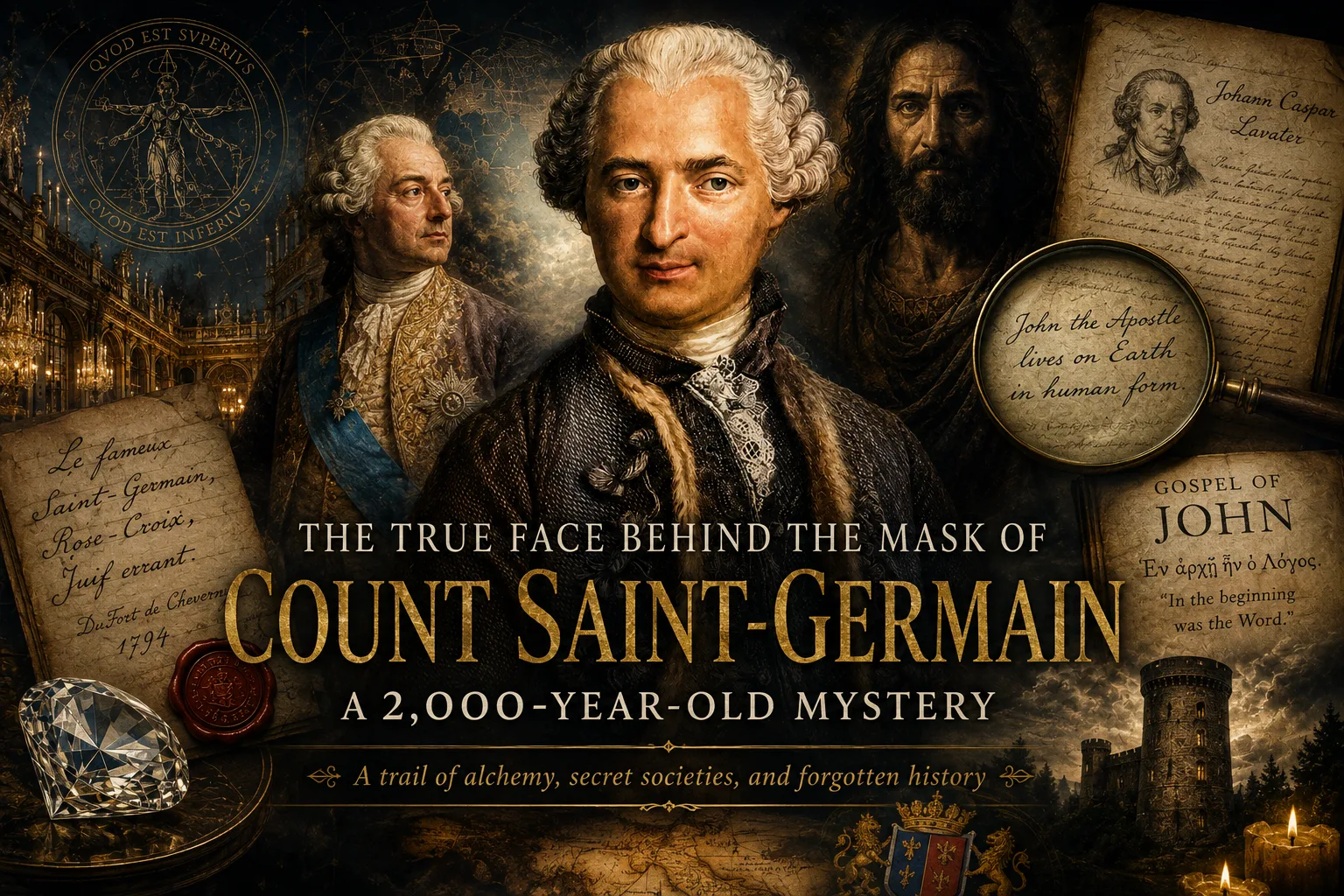
Interestingly, we still use these exact principles in modern science today. In gravitational separation, repeated vertical movement separates materials based entirely on their density. In liquid-liquid extraction, repeated mixing and settling allows compounds to transition to their proper phases. Even basic laboratory sieving relies on continuous oscillation to separate particles by size. While these are modern scientific techniques, they reveal the exact same primordial principle: separation through repeated, cyclical movement. A remarkably similar pattern appears centuries later in esoteric literature. In The Most Holy Trinosophia, during his initiation, the Count of Saint-Germain describes being violently lifted from the earth to the heavens, and then plunged back down again. Only after undergoing these intense, repeating cycles of ascent and descent is he allowed to enter a higher realm, encounter the prophet Zoroaster, and stand before the Grand Master.
Both texts, whether read symbolically or literally, describe transformation through repeated cycles—never through a single, isolated event. But why must we separate something to begin with? Perhaps because only through complete separation can each individual principle be understood in its absolute, purest form. Only then can their relationship become truly meaningful. Notice that Hermes does not tell us to choose either the higher or the lower realm. He states that the Work receives the combined force of both the higher and the lower. This means the ultimate power does not exist in either of the two poles alone; it only manifests when the pure forces of both opposites are present at the exact same time. Immediately after stating this, Hermes writes:
"By this means you shall have the glory of the whole world."
It is impossible to ignore the precise sequence of these instructions. This raises an incredible possibility. Perhaps the Emerald Tablet does not ultimately describe a magical liquid or a physical stone. Perhaps it describes a universal process of transformation itself—a process that manifests in nature, in matter, in human consciousness, and perhaps within our own bodies. If this is true, then the famous first line of the Tablet was never just an introduction. "True, without falsehood, certain, and most true." Those words represent the three distinct stages that unlock the entire work.
Furthermore, this secret is encoded in the very name of the author: Hermes Trismegistus. "Tris" means triple or threefold. "Megistus" means greatest or wise. His name literally translates to The Master of the Threefold Wisdom. This directly matches the title of Saint-Germain's manuscript, The Most Holy Threefold Wisdom.
Hermes was never a single historical person; it is an initiatory title representing the structure behind these teachings. The ultimate power only appears when the pure forces of opposite principles are united. But fulfilling those principles requires navigating these three distinct stages. While each stage is perfect on its own, it is the co-existence of all three together that brings about the Great Work. This leaves us with a profound question. If Hermes Trismegistus is a title rather than a person, what is the hidden structure behind these teachings? Who—or what—is truly speaking through the wisdom of the Emerald Tablet?
In The Most Holy Trinosophia, we encounter a massive clue. After the initiate completes the initial steps of ascending and descending, it is not Hermes or Thoth who appears to him. It is Zoroaster. Why Zoroaster?
The mystery deepens even further when we look at early Christian and Gnostic texts. In one of the most enigmatic apocryphal manuscripts, The Secret Gospel of John, Jesus explicitly directs John to the Book of Zoroaster to learn the truth about the hidden powers of this world. Why would an ancient Egyptian mystery, an 18th-century alchemist, and a hidden Gnostic gospel all point to the exact same Persian prophet? I believe the answer to this question holds the ultimate key to decoding the Emerald Tablet. And that is the mystery we will address in Part Three.